
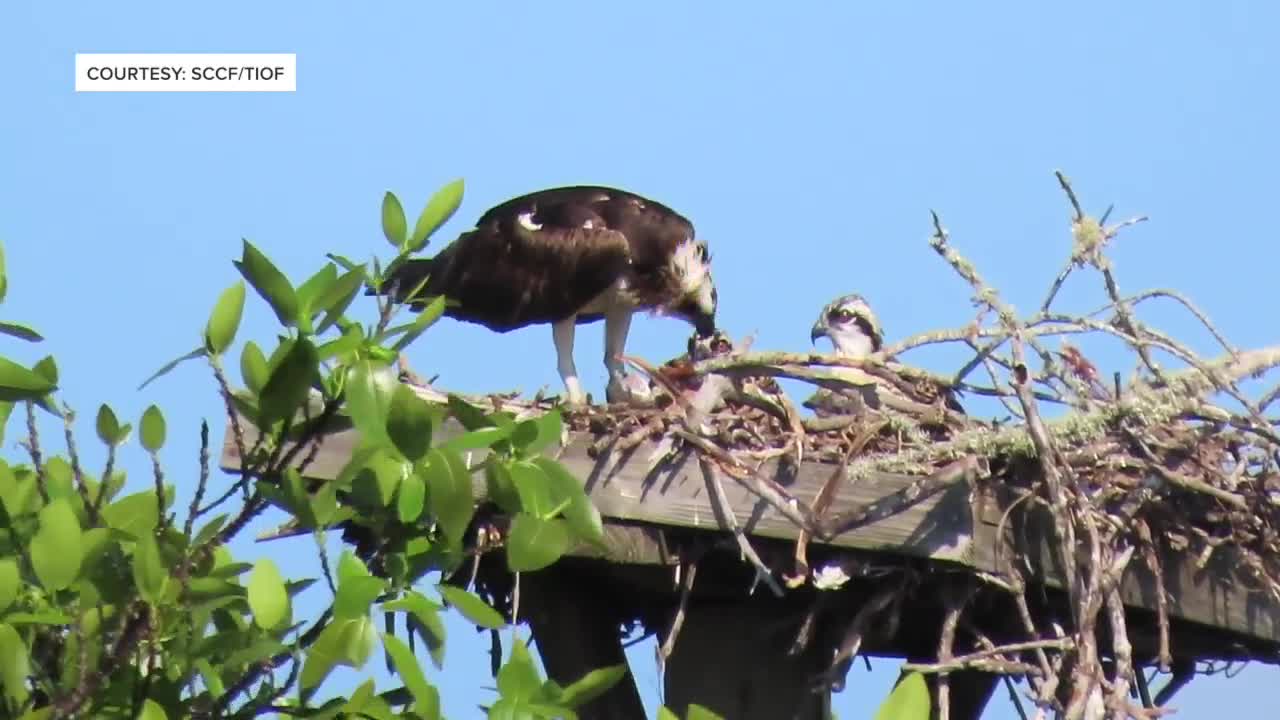


SANIBEL, Fla. — Osprey nesting season has begun in Southwest Florida, bringing changes to how these important birds are monitored and protected.
The International Osprey Foundation officially transitioned its work to the Sanibel-Captiva Conservation Foundation (SCCF) at the start of the year, placing the long-running osprey monitoring program under SCCF's umbrella.
"It just became too much workload, and we also have big ambitions," said Kathryn Brintnall, former International Osprey Foundation president.
Southwest Florida is home to hundreds of nesting osprey pairs, making the transition significant for both the birds and the region.
Amanda Manrique, SCCF's osprey program coordinator, said the move is a natural fit.
"I think it's going to be a really great fit," Manrique said. "Their mission of protection and conservation of ospreys fits really well with SCCF's mission of protecting our coastal ecosystems."
The transition comes right as osprey nesting season begins in Florida. Dozens of volunteers spent Wednesday morning learning how to monitor nests and why ospreys are such an important indicator of environmental health.
"The health of the ospreys is a direct reflection of the health of the waterways and the fish that they are eating," Manrique said.
Brintnall added that changes in osprey productivity often mirror changes in the environment.
"When bad things happen, their productivity goes down. When good things happen, their productivity goes up," Brintnall said. "So they are a great barometer."
Nationwide, osprey populations have rebounded significantly since their lows in the 1950s, largely due to the ban of DDT. But here in Southwest Florida, the population suffered setbacks after Hurricane Ian.
Brintnall said recovery has been underway but remains fragile.
"It has been a steady increase for the last three years," Brintnall said. "Recovery takes three to five, if we don't have another storm or another big terrible event."
Despite the progress, Brintnall remains concerned about long-term growth, particularly as development continues across the state.
"That loss of habitat is going to affect the population eventually," Brintnall said.
Osprey nesting season is just getting started, with chicks typically hatching in the spring. About seven weeks later, they'll begin learning to fly and fish on their own.
This story was reported on-air by a journalist and has been converted to this platform with the assistance of AI. Our editorial team verifies all reporting on all platforms for fairness and accuracy.
