


DESOTO COUNTY, Fla. — DeSoto County is suffering through it's worst drought in at least 25 years, forcing farmers to confront an uncertain future as the brunt of dry season arrives ahead of schedule.
WATCH: DeSoto County farmers battle through historic drought:
All of DeSoto County is under extreme drought, according to U.S. Drought Monitor data released on Thursday. The last time the entire county was entirely in extreme drought was 2001, according to FOX 4 Meteorologist Katie Walls.
Fifth-generation farmer V.C. Hollingsworth III said this is the worst drought he has ever experienced, forcing him to sell cattle and dig deeper watering ponds. The drought has transformed large parts of the county into a sea of crisp brown grass and dried-up ponds.
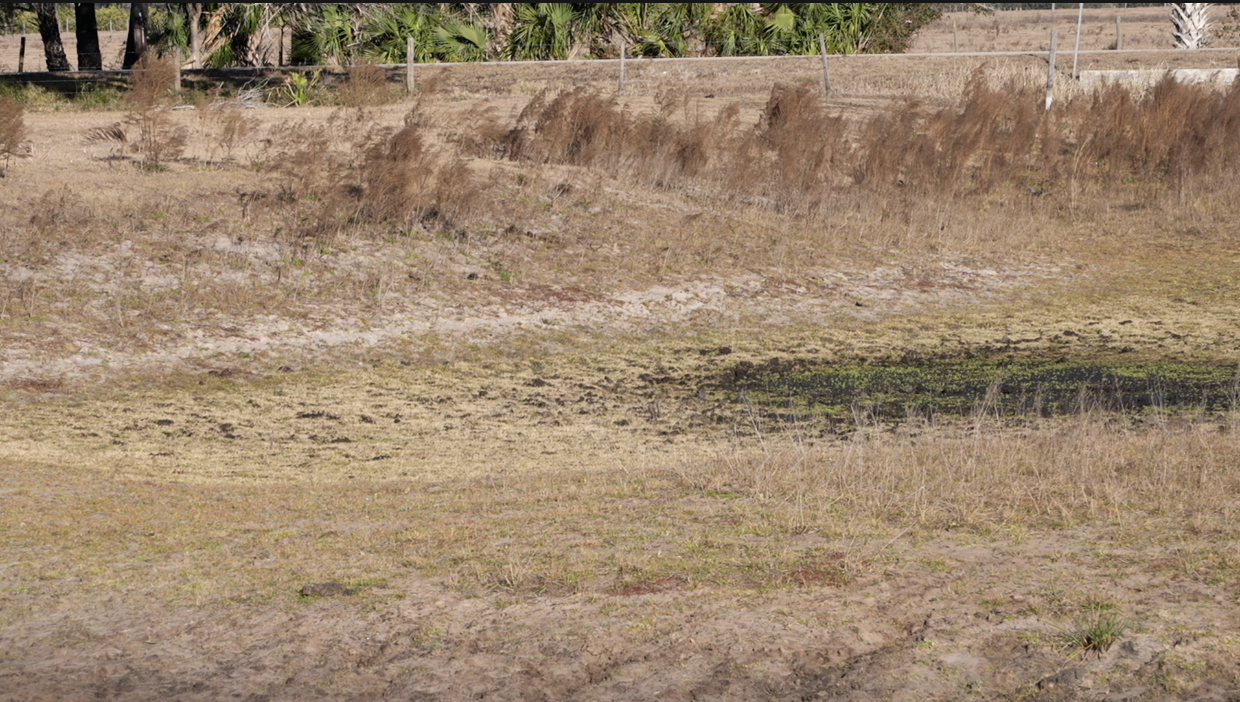
“It’s a real hard position to be in right now," Hollingsworth said. "And you don’t know what next week or the next week is going to give you.”
DeSoto County has battled dry conditions for the last two years, Hollingsworth said. 93% of DeSoto County experienced extreme drought in May of last year.
But extreme drought arrived much earlier in 2026. These exceptionally dry conditions are three months ahead of schedule, Walls said.
"What we'd normally see in May, we're seeing now, in early February," Walls said.
That's partly because Southwest Florida didn't experience a tropical system during the rainy season.
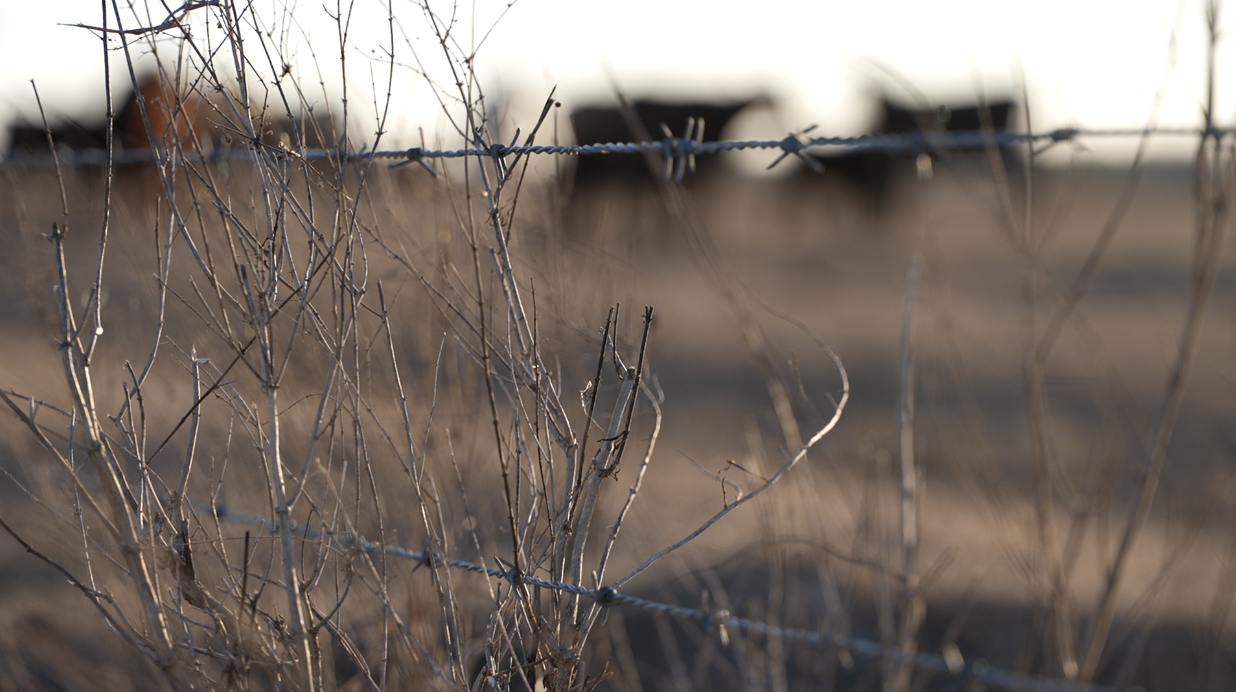
Hollingsworth and other farmers are trying to adapt. Hollingsworth said his ponds are running dry, forcing him to dig deeper into the ground. In some cases, he is re-digging ponds 30 to 40 feet to try and suck more water out of the ground.
“I’ve never seen it this bad.” Hollingsworth said.
Hollingsworth said he plans to install solar-powered water pumps to make up the difference.
Recent cold snaps haven't helped. Hollingsworth also grows citrus and scrambled to cover his plants before last weekend's historic low temperatures.
“It definitely changes the economics of ranching and farming and crop production," said Kendall Gill, the livestock and small farms agent for the University of Florida's Institute of Food and Agricultural Sciences (UF/IFAS) extension office in Arcadia.

Hollingsworth said he is spending more money on hay and feed to make up for the lack of grass. He said the economic impact of the drought isn't fully clear, but it's going to be bad.
For the moment, he's taking an uncertain step into the future, hoping for more rain.
"I don't know how to do anything else," Hollingsworth said.
This story was reported on-air by a journalist and has been converted to this platform with the assistance of AI. Our editorial team verifies all reporting on all platforms for fairness and accuracy.
