
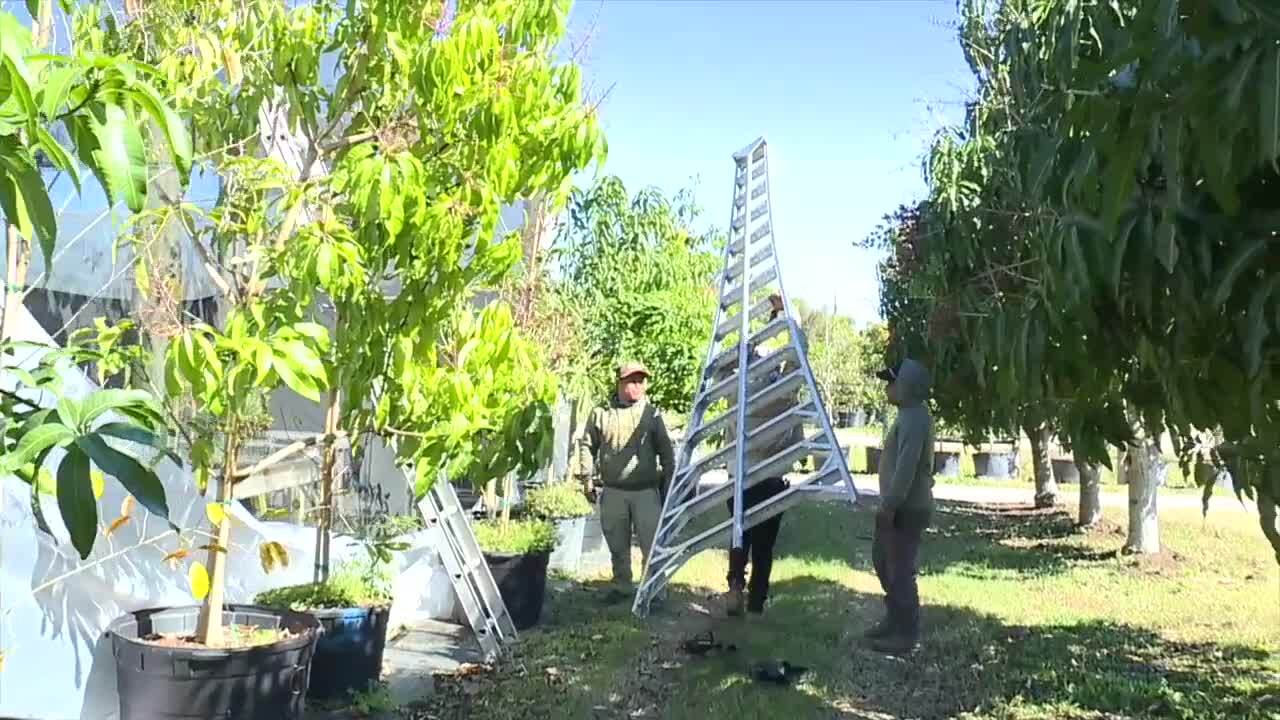


BOKEELIA, Fla. — At first glance, a tiny mango sitting in a pot at Fruitscapes Nursery might not seem especially fragile.
But like most tropical fruits, mangoes have little tolerance for cold temperatures—making winter weather a serious threat.
Senior Reporter Emily Young learns how they keep all sorts of different crops warm:
At Fruitscapes Nursery in Bokeelia, workers are taking proactive measures to protect their crops as temperatures drop. The nursery grows a wide variety of fruits, including mangoess, stone fruits like apricots and peaches, and tropical varieties such as papaya and starfruit.
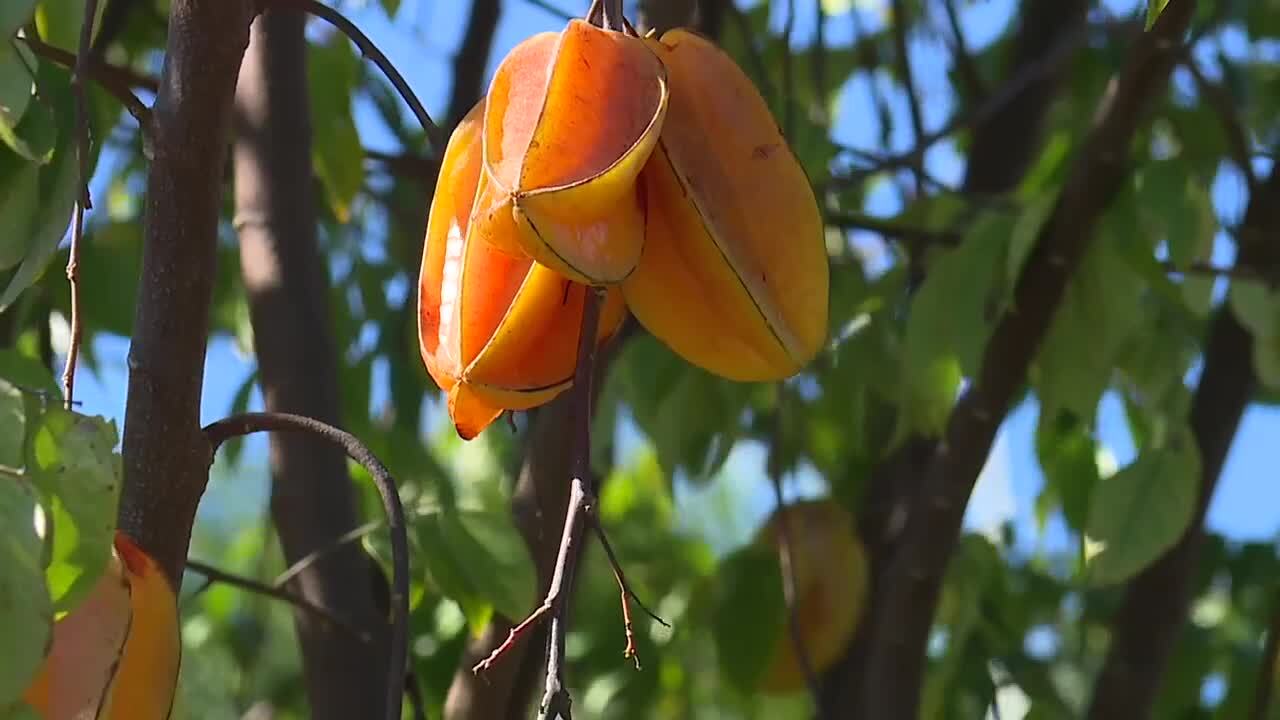
They even cultivate cacao trees—all of which need added protection when cold weather moves in.
Employees have been busy installing plastic tarps around sensitive plants to help block out the cold. The nursery also uses a product called Vapor Guard, a spray that seals the pores of leaves to prevent them from drying out in low temperatures.
For crops grown in open fields, such as tomatoes, workers rely on frost cloths. These coverings act like blankets, trapping heat and shielding plants from frost damage.
For many farms and nurseries, losing crops to cold weather could be financially devastating. But Fruitscapes’ diverse approach to growing helps reduce that risk.
“There’s a lot of things we grow here that die, so not having all your eggs in one basket, I would say is a good thing,” said Elijah Sopher, manager of Fruitscapes LLC.
When asked which crops tend to fare better in colder conditions, Sopher pointed to several hardy options. “Avocados, lychees, cashews, loquats, miracle fruits—any of the big trees too,” he said.
As temperatures dip, it’s careful planning and crop diversity that are helping keep Fruitscapes’ fields alive—and productive—through the cold.
