
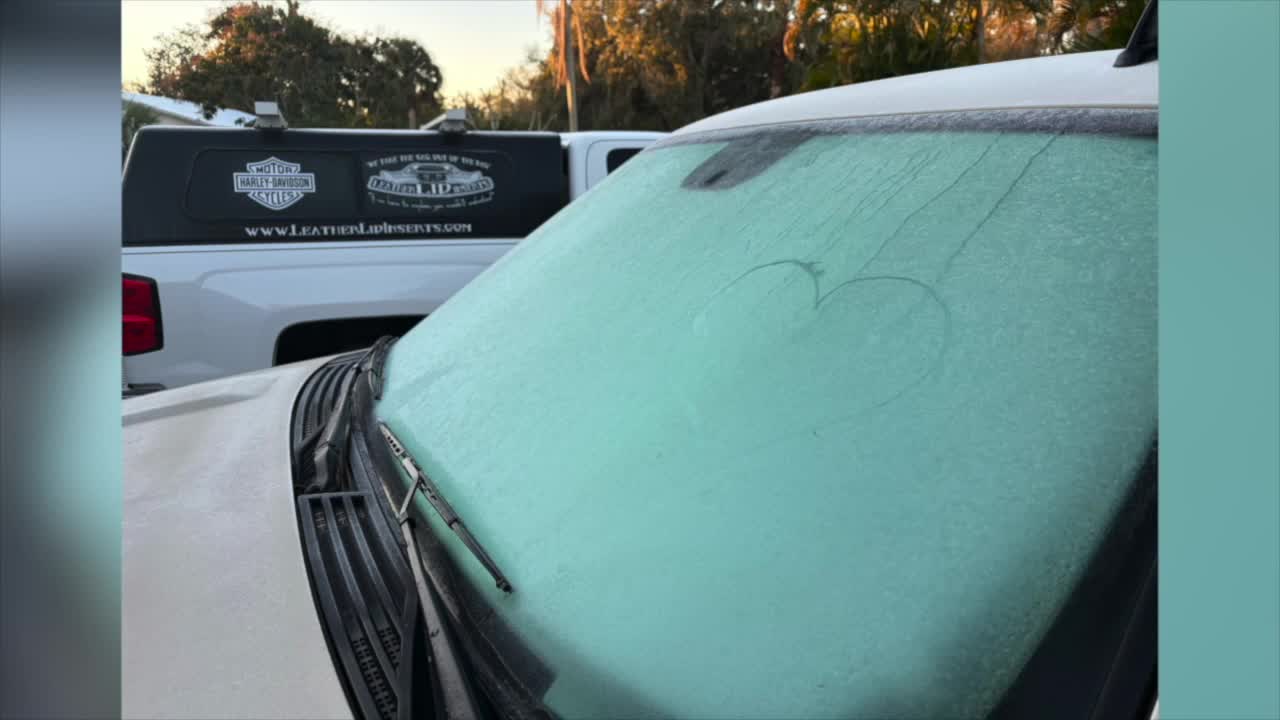


January has been a weather roller coaster in Southwest Florida, and the dips have been especially chilling.
Typically, Fort Myers sees one or two mornings in the 30s during the winter season. This January, however, residents have woken up to temperatures in the 30s four separate mornings — something that hasn’t happened since 2010.
“This is the coldest air we’ve seen in about 16 years,” said National Weather Service meteorologist Matt Anderson. In fact, the last time Fort Myers dropped below freezing was also in 2010, making this month’s cold snaps especially notable.
So what’s behind the unusually cold start to the year? The answer lies thousands of miles away — in the Arctic.
Meteorologists are pointing to the Arctic Oscillation, or AO, a climate pattern that helps determine how far south cold Arctic air can travel. The AO shifts between positive and negative phases, and when it turns strongly negative, colder air is able to plunge deeper into the southern United States.
Right now, that’s exactly what’s happening.
“The Arctic Oscillation is around negative five, which is pretty rare,” Anderson explained. “That value is something we may not have seen since 2010.”
When the AO is negative, the jet stream dips farther south, opening the door for cold air outbreaks across Florida and much of the eastern U.S.
It’s also the reason states to our north have been hit with back-to-back winter storms this month. “The AO doesn’t just tell us if Florida is going to get cold,” Anderson said. “It’s really a signal for the entire eastern United States.”
Meteorologists use the Arctic Oscillation as a key forecasting tool, helping them anticipate how the jet stream will behave weeks in advance — and whether cold air could make an unwelcome return.
And while there is some good news, it comes with a caveat. The AO is expected to moderate after this latest cold snap, allowing temperatures to rebound somewhat. But that break may be short-lived. “By about mid-February, we could get on the cold side again,” Anderson said. “The AO is forecast to drop back down to around negative five, so winter may continue to trend colder than normal.” So don’t pack away those sweaters just yet.
